“My brother once picked me up and physically threw me out of the house. Left me out there for hours in the hot sun. I wasn’t even wearing shoes.”
“I will always remember when he punched me in the face because it reminds me that he is not afraid to hurt me and that I need to be cautious of him.”
“We don’t talk anymore. I’ve already had a no-contact order … I’d like to have one for life … and never hear from this person again.”
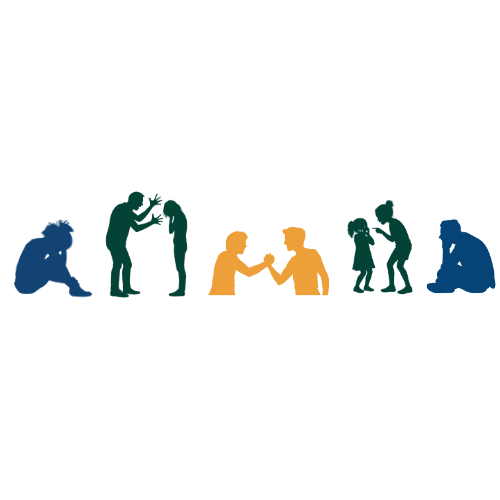
“SCAARS” indeed.
These statements were made by participants involved in Canada’s first national study on sibling conflict and abuse. It turns out that sibling abuse is alive and well in Canada, much like international studies have shown.
I’ve had the honour to be working with the team on this project, including the website SCAAR.CA.
The Sibling Conflict, Aggression and Abuse Research was initiated and led by Dr. Joseph Michalski, professor in the department of Sociology at King’s University College at Western University in London, Ontario. He is the author of several books, including a deep dive into the broad issue of family violence, with a chapter on Sibling Abuse. Seeing there had never been a single national study on sibling abuse led him to seek – and receive – grant funding from the Social Sciences and Humanities Research Council (SSHRC) to create one.
Dr. Geneviève Bouchard, Psychology professor from Université de Moncton, Moncton New Brunswick, has done several studies on sibling bullying, and was soon Dr. Michalski’s co-investigator.
Stage 1 of the study was done in 2024/25, and the research papers for that will soon be coming out. The main purpose of the study was to identify the prevalence, frequency, severity, and underlying causes of sibling aggression and abuse, with a sample of adolescents between 19 and 24, and their relationship with the sibling closest in age during their adolescence (between the ages of 12 and 18). It also looked at the ‘long-term’ impacts on adolescent psychological well-being, health, and development. A long-term goal is to develop programming and materials to raise awareness and provide education for families and professionals working with children, youth and families.
Here are some of the results of that study:
- Roughly 3 in 5 respondents experienced sibling violence at least once during adolescence, and two-thirds experienced and/or perpetrated sibling violence at least once
- If we combine sibling violence AND bullying behavior*, nearly three-fourths reported perpetrating and/or experiencing such violence/bullying during adolescence, or about 78% of males and 70% of females
- Those who experienced sibling violence or bullying* during adolescence had lower self-esteem and life satisfaction, and reported more alcohol and drug use as young adults.
* NOTE: As used in this study, “sibling bullying encompasses a range of different types of aggressive behaviours intended to cause harm and dominate repeatedly over time. It is a pattern of behaviour rather than just one act, usually rooted in perceived or real power imbalances that result in the receiver’s inability to stop the aggression from occurring. In addition to physically aggressive behaviours, such bullying can include psychological, relational, and property-based forms of aggression”. (Dr. J. Michalski)
AND a few more “scaars” shared by the participants …
It made me feel like my feelings don’t matter and I still struggle with negative thinking patterns & low self-esteem which impacts my current relationships with other people.
I’ve tried to avoid him as much as possible over the years. He’s always been angry and violent and controlling, but I can’t afford to move out so I can’t avoid interacting with him.
My sister continued to steal my stuff and also money many times.

Stage 2 of the research is currently underway.
Those of us who have lived with, talked about, or looked at existing research on sibling abuse may see some limitations in the description above: often the abusive sibling is NOT the one closest in age, or the abuse had ended before adolescence. And of course, there are infinite stories by adults over the age of 24 who vividly recall incidents of conflict, aggression and abuse from their childhood.
The good news is …THAT’s next with this research. Stage 2, the Canadian National Study of Sibling and Family Relationships, significantly broadens the scope of the research; the subjects are 18 years and up, discussing the relationships with any sibling during their childhood, not just during their adolescent years.
It ALSO offers an option for an interview, an opportunity to talk about their experiences beyond the ‘checkboxes’ of a survey, to explore a broader, deeper range of questions.
I look forward to sharing more of the results, further interview possibilities, as well as materials and programming that is developed from the research.
In the meantime, check out the website!